
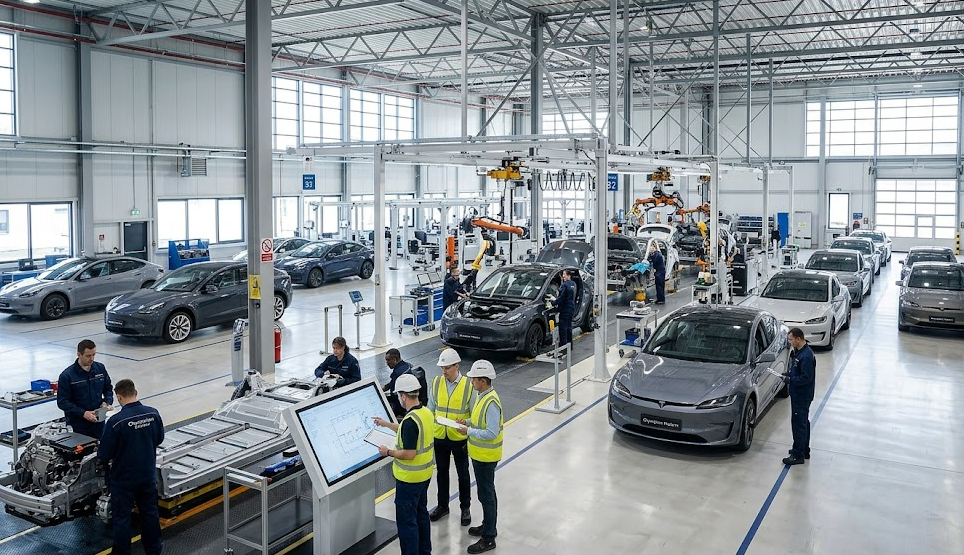
Olympian Motors was founded as part of the new wave of electric vehicle startups aiming to rethink how cars are designed, built, and experienced in a digital-first world. The company emerged with a vision to challenge traditional automotive manufacturing by focusing on software-defined vehicles rather than purely mechanical innovation. Its founding philosophy centers on the idea that future mobility will be driven by intelligent systems, where vehicles continuously improve through updates and data-driven optimization instead of remaining fixed after production.
From the beginning, Olympian Motors positioned itself as more than just a car company. It describes itself as a technology-driven mobility platform that integrates hardware engineering with advanced computing systems. The founders emphasized a long-term strategy focused on scalability, modular design, and AI integration, aiming to reduce complexity in vehicle production while increasing customization for users. This foundation sets the tone for how the company approaches every aspect of its development, from design language to software architecture.
Modular EV Platform (Olympus System)
The core innovation behind Olympian Motors is its modular electric vehicle platform, often referred to as the Olympus system. This platform is designed to function like a flexible base architecture that can support multiple vehicle types without requiring a complete redesign for each model. Instead of building each car from scratch, the modular system allows components such as battery units, computing modules, and drivetrain elements to be standardized and reused across different models.
This approach is intended to significantly reduce manufacturing costs and development time while increasing efficiency in production. The modular system also enables easier upgrades, meaning certain vehicle components can be replaced or improved without discarding the entire car. This concept aligns with modern EV industry trends where flexibility, scalability, and sustainability are becoming key priorities for manufacturers looking to compete in a rapidly evolving market.
Key Benefits of Modular System
| Feature | Advantage |
|---|---|
| Modular Design | Faster production cycles |
| Standardized Components | Lower manufacturing cost |
| Upgrade Flexibility | Easier hardware/software updates |
| Scalability | Supports multiple vehicle models |
This system allows Olympian Motors to focus on innovation in software and user experience while maintaining efficiency in hardware production.
Design Philosophy and Vehicle Architecture

Olympian Motors places strong emphasis on minimalist design and futuristic aesthetics, focusing on clean interiors, simplified interfaces, and user-centered layouts. The company’s design philosophy is influenced by the idea that vehicles should feel more like intelligent living spaces rather than traditional machines filled with complex controls and mechanical distractions. This results in a design language that prioritizes simplicity, comfort, and digital integration.
The vehicle architecture itself is built around a central computing system that manages most vehicle functions through software. This reduces reliance on mechanical complexity and allows for more fluid updates and feature enhancements over time. By integrating hardware and software into a unified structure, Olympian Motors aims to deliver a driving experience that is not only efficient but also continuously evolving based on user behavior and system improvements.
Technology Stack: AI and Software Integration
At the heart of Olympian Motors’ strategy is its focus on artificial intelligence and software-defined mobility. The company is developing what it calls an AI-native operating system designed to control and optimize vehicle performance, safety features, infotainment, and energy efficiency. This system is intended to learn from driving patterns and environmental conditions to improve functionality over time.
The integration of AI allows the vehicle to adapt dynamically, offering personalized driving experiences and predictive maintenance capabilities. Instead of relying solely on manual updates or hardware upgrades, the system can evolve through over-the-air software improvements. This positions Olympian Motors within the broader trend of smart vehicles that act as connected digital ecosystems rather than standalone machines.
Partnerships and Industry Position
Olympian Motors builds partnerships with key technology companies in semiconductor manufacturing, artificial intelligence, and cloud infrastructure to support its long-term goals. These collaborations strengthen its ability to develop advanced computing systems and scalable production methods for future vehicles.
In the broader automotive industry, the market still views Olympian Motors as an early-stage startup competing in a highly competitive EV space dominated by established players. However, its focus on modular design and AI integration gives it a unique position among newer companies that aim to redefine mobility. The company is still developing its production capabilities, but its strategic partnerships and technological ambitions place it among high-potential but high-risk innovators.
Industry Position Comparison
| Company | Focus | Market Stage |
|---|---|---|
| Olympian Motors | AI + Modular EVs | Early-stage startup |
| Tesla | Full-scale EV production | Market leader |
| Rivian | Adventure EVs | Growth stage |
| Lucid Motors | Luxury EVs | Premium segment |
While Olympian Motors is still in its early development phase, its strong focus on AI and modular design gives it a unique identity in the EV startup landscape.
Market Challenges and Criticism
Despite its ambitious vision, Olympian Motors faces several challenges common to early-stage EV startups. One of the primary concerns is scalability, as moving from prototype development to mass production requires significant capital investment, manufacturing infrastructure, and supply chain stability. Many startups in the EV sector struggle to bridge this gap effectively.
Another challenge lies in market credibility and execution. While the company presents a strong technological vision, it still needs to demonstrate real-world vehicle production and long-term reliability. Investors and industry analysts often remain cautious until startups can prove consistent delivery and consumer adoption. Competition is also intense, with major automakers and well-funded EV companies continuously advancing their own technologies.
Future Outlook of Olympian Motors
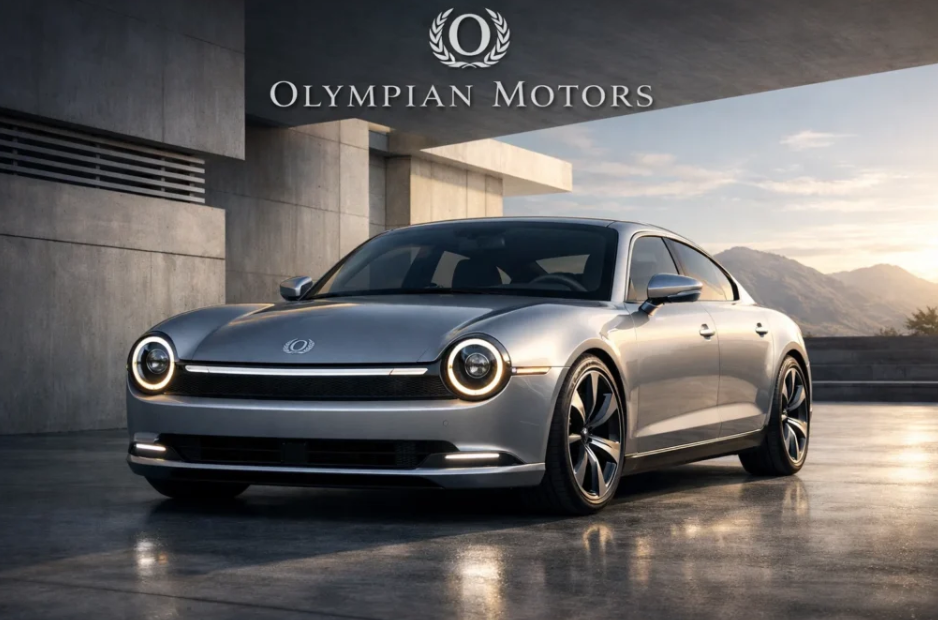
The future of Olympian Motors depends largely on its ability to transition from concept development to scalable production. If successful, its modular platform and AI-driven architecture could position it as a disruptive force in the EV industry, particularly in the segment of software-defined vehicles. The company’s long-term vision aligns with the global shift toward smarter, more connected transportation systems.
However, its success will depend on execution, funding stability, and market acceptance. As the EV industry continues to evolve rapidly, companies like Olympian Motors will need to prove that their innovative approaches can translate into practical, reliable, and commercially viable products. If it manages to achieve this balance, it could become part of the next generation of automotive innovators shaping the future of mobility.
Conclusion
Olympian Motors represents a modern attempt to redefine electric vehicles through software intelligence, modular design, and AI integration. While still in its early stages, the company’s vision reflects major shifts in the automotive industry toward smarter and more flexible mobility solutions. Its future will depend on how effectively it can turn its ambitious ideas into real-world production success.
FAQs
1. What is Olympian Motors?
It is an electric vehicle startup focused on AI-powered, software-defined modular cars.
2. Where is Olympian Motors based?
It is based in the United States, primarily operating out of New York.
3. What makes Olympian Motors different?
Its focus on modular EV platforms and AI-driven operating systems sets it apart.
4. Is Olympian Motors producing cars yet?
It is still in early development and has not reached large-scale mass production.
