
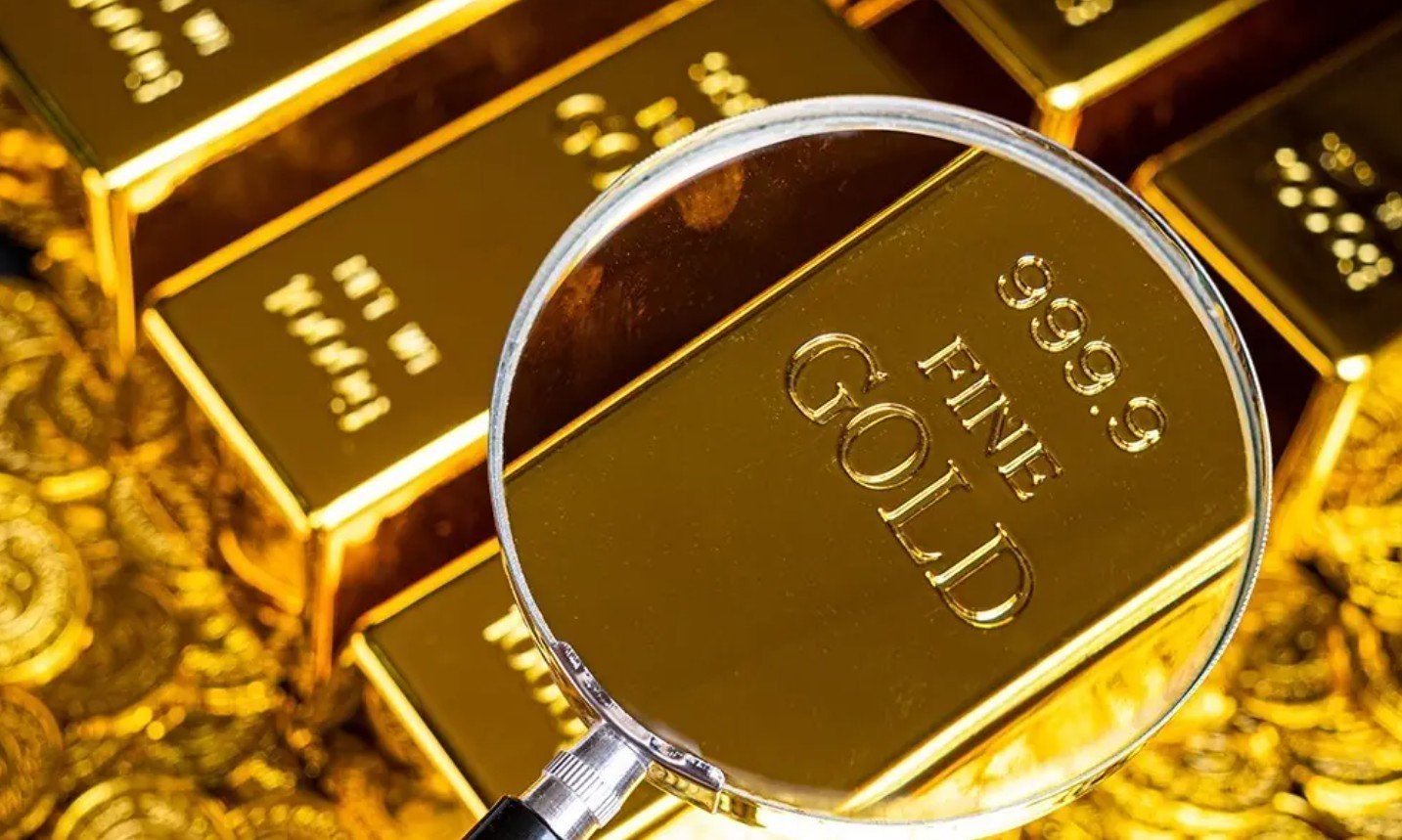
Gold has always been the world’s most closely watched financial barometer. Whether you’re a seasoned portfolio manager or a first-time investor trying to protect your savings, knowing where to find accurate, real-time gold price data is not optional — it’s essential. That’s precisely why millions of investors worldwide search for gold price FintechZoom every day. In this guide, we break down what FintechZoom’s gold tracking tools offer, what’s driving gold prices right now, and how to use this information to make smarter financial decisions.
What Is Gold Price FintechZoom?
FintechZoom is a financial technology media and data platform that provides real-time market data, expert analysis, and investment insights across stocks, cryptocurrencies, commodities, and precious metals. When investors search for “gold price FintechZoom,” they are specifically looking for the platform’s live gold tracking features, which display the spot price of gold (XAU/USD) in real time, updated minute by minute.
The platform’s gold section sits under its Markets → Commodities category and offers several core tools:
- Live spot price charts denominated in USD, GBP, EUR, and other major currencies
- Historical price data spanning multiple timeframes for trend analysis
- Customizable price alerts sent via browser or email notification
- Expert market commentary from professional traders and analysts
What distinguishes FintechZoom from a basic price ticker is the context it provides around price movements. Rather than simply displaying a number, the platform aggregates data from global exchanges — including COMEX in New York and the London OTC market — to offer a comprehensive picture of what’s moving gold prices at any given moment.
Where Is Gold Trading Right Now? (May 2026 Update)
Understanding the gold market’s current position is critical to evaluating any data platform’s usefulness. As of May 4, 2026, gold is trading at approximately $4,621 per troy ounce, having pulled back from its all-time high of $5,595 per ounce recorded on January 29, 2026. That earlier peak represented a staggering rally — gold climbed over 55% throughout 2025, surpassing $4,000/oz for the first time in history that October.
The current price consolidation reflects a complex tug-of-war between several forces. On one hand, ongoing geopolitical tensions — including a Middle East conflict now entering its tenth week — have historically been powerful catalysts for safe-haven demand. On the other hand, elevated global inflation risks stemming from energy price disruptions have fueled concerns that central banks may keep interest rates higher for longer, which reduces the relative appeal of non-yielding assets like gold.
Despite the near-term pullback, the long-term institutional outlook remains firmly bullish. J.P. Morgan Global Research forecasts gold prices averaging around $5,055 per ounce by the final quarter of 2026, with a potential path toward $5,400/oz through 2027. TD Securities has similarly raised its annual average projection to $4,831/oz, citing global policy uncertainty and structural demand drivers.
Why Do Investors Trust FintechZoom for Gold Prices?
1. Real-Time Data from Global Exchanges
Gold is traded around the clock across multiple markets. A platform that pulls data from only one exchange gives investors an incomplete picture. FintechZoom aggregates its pricing feeds from multiple authoritative sources, including global commodity exchanges, ensuring that the XAU/USD price displayed reflects the true international spot price rather than a regional approximation.
2. Multi-Currency Support
Gold is priced internationally in U.S. dollars, but investors around the world need to see values in their local currencies. A stronger dollar typically suppresses gold demand from international buyers, while a weaker dollar — as we’ve seen in early 2026, with the dollar index hovering near two-month lows — makes gold more affordable globally and boosts demand. FintechZoom’s ability to display gold prices in GBP, EUR, and other denominations gives global investors actionable, locally relevant data.
3. Historical Chart Access
One of the most valuable features for technical traders is access to multi-year historical price data. Identifying support levels, resistance zones, and long-term trend channels requires seeing where gold has been, not just where it is. FintechZoom’s historical charts allow investors to zoom into specific time frames to study micro-movements or pull back for a decade-long perspective.
4. Expert Commentary and Market Analysis
Raw price data only tells part of the story. FintechZoom supplements its charts with analysis from experienced market participants, helping users connect price movements to their underlying causes — whether that’s a Federal Reserve rate decision, a shift in central bank reserve strategy, or a geopolitical event.
What Actually Moves the Gold Price? Key Drivers Explained
Understanding the forces behind gold price fluctuations makes you a more informed investor and helps you interpret the data on platforms like FintechZoom more effectively.
Inflation and Purchasing Power
Inflation is one of the most powerful long-term drivers of gold demand. When the cost of goods and services rises and paper currencies lose purchasing power, gold’s finite supply and universal acceptance make it an effective store of value. This relationship has been particularly visible over the last two years, as global inflation pressures drove retail and institutional investors alike toward the precious metal.
Interest Rates and Opportunity Cost
Gold does not pay dividends or interest. When bond yields are high, investors can earn attractive returns from fixed-income assets, making gold comparatively less appealing. Conversely, when interest rates fall or are expected to fall, gold’s lack of yield becomes less of a disadvantage. Currently, with the probability of a June 2026 Federal Reserve rate cut sitting below 6%, rates remaining elevated continues to act as a modest headwind for gold.
U.S. Dollar Strength
Because gold is priced in U.S. dollars, the two assets share an inverse relationship. A weakening dollar — such as the approximately 10% decline seen under the Trump administration’s current policy framework — makes gold cheaper for foreign buyers, stimulating demand and lifting prices. Platforms like FintechZoom allow investors to track the dollar index alongside gold prices, making it easier to spot these correlated moves.
Central Bank Buying
Central bank demand has been a defining structural force in the gold market. Data from the World Gold Council confirms that central banks increased their gold reserves in the first quarter of 2026, continuing a multi-year trend of accumulation. J.P. Morgan projects central bank demand to average around 585 tonnes per quarter in 2026 — a powerful and consistent source of institutional buying pressure beneath the market.
Geopolitical Risk
When global stability deteriorates, investors historically flock to gold as a safe-haven asset. The current Middle East conflict is a prime example: while gold initially rallied on the uncertainty, subsequent inflation concerns from energy disruptions have created a more complex dynamic, keeping gold elevated even as risk sentiment shifts.
How to Use FintechZoom’s Gold Tools Effectively
Getting the most from any data platform requires knowing how to apply the information strategically. Here are practical ways to use gold price data from FintechZoom:
Set Price Alerts Strategically: Rather than watching charts all day, configure browser or email alerts at key price levels. For example, if gold falls toward the support zone of $4,579–$4,607 per ounce — a level analysts currently watch — an alert can prompt timely action without constant monitoring.
Compare Gold Against Other Assets: FintechZoom allows users to compare gold prices alongside other market indicators, including equity indices and currencies. This broader context reveals whether gold is rallying in isolation (typically a fear-driven move) or rising alongside risk assets (a different signal entirely).
Use Historical Data for Dollar-Cost Averaging: Long-term investors who employ dollar-cost averaging — investing fixed amounts at regular intervals — benefit from seeing how gold has behaved across multiple market cycles. Historical charts help set realistic expectations and identify patterns.
Cross-Reference with Expert Forecasts: FintechZoom’s analyst commentary should be used alongside data from institutional sources like the World Gold Council, J.P. Morgan, and Goldman Sachs for a well-rounded view before making any investment decision.
The Bigger Picture: Is Gold a Good Investment in 2026?
This is the question every investor eventually asks, and it deserves an honest, nuanced answer. Gold’s role in a portfolio is not primarily about generating explosive returns — it is about capital preservation, diversification, and hedging against tail risks.
From 1971 through 2024, gold delivered an average annual return of approximately 7.9%, compared to the stock market’s 10.7% over the same period. Gold underperforms equities in prolonged bull markets but provides crucial protection during downturns, financial crises, and inflationary periods — precisely the conditions the world has navigated in recent years.
The World Gold Council’s 2026 outlook notes that under a scenario of falling yields, elevated geopolitical stress, and a pronounced flight to safety, gold could surge 15–30% from current levels. Even in a more moderate scenario of gradual economic slowdown and rate cuts, gains of 5–15% remain plausible. Only in an unexpectedly strong global growth scenario — where equities surge and the dollar strengthens sharply — does the outlook for gold become significantly less favorable.
For most investors, gold represents a prudent 5–15% allocation within a diversified portfolio, used as insurance rather than a primary growth engine.
Final Takeaway
Gold price FintechZoom represents more than a simple search query — it reflects a genuine need among investors for reliable, real-time, and contextually rich precious metals data. With gold currently trading near $4,600/oz against a backdrop of geopolitical tension, central bank accumulation, and a weakening U.S. dollar, the market is anything but dull. Platforms like FintechZoom that aggregate global exchange data, provide historical context, and layer in expert analysis serve a genuinely valuable function for investors trying to navigate these conditions.
As with any investment, the data is only as useful as the judgment applied to it. Use platforms like FintechZoom as one tool among many, combine their real-time feeds with institutional research, and always align your gold investment strategy with your broader financial goals and risk tolerance.
Disclaimer: This article is for informational purposes only and does not constitute financial or investment advice. Gold prices are volatile and past performance is not indicative of future results. Always consult a qualified financial advisor before making investment decisions.
